Key Takeaways
Selling a storm-damaged house in Florida is often possible without making repairs first. Understanding your disclosure obligations, insurance considerations, and available selling options can help you make an informed decision and avoid unnecessary expenses.
You can sell a storm-damaged house in Florida. Homes with hurricane, wind, flood, roof, or water damage can often be sold without completing repairs.
Repairs are not usually required before selling. Many Florida homeowners choose to sell their property as-is rather than invest in costly renovations after a storm.
Florida sellers typically need to disclose known storm damage. Roof leaks, flooding, mold, structural issues, and other material defects should generally be disclosed to prospective buyers.
Request your cash offer!
Timeframe: After you tell us a bit about your home, we will get to work creating a customized offer.
If you choose to accept, we are able to close as quickly as 7 days! Of course, if you need longer, we will always work on your schedule.
"*" indicates required fields
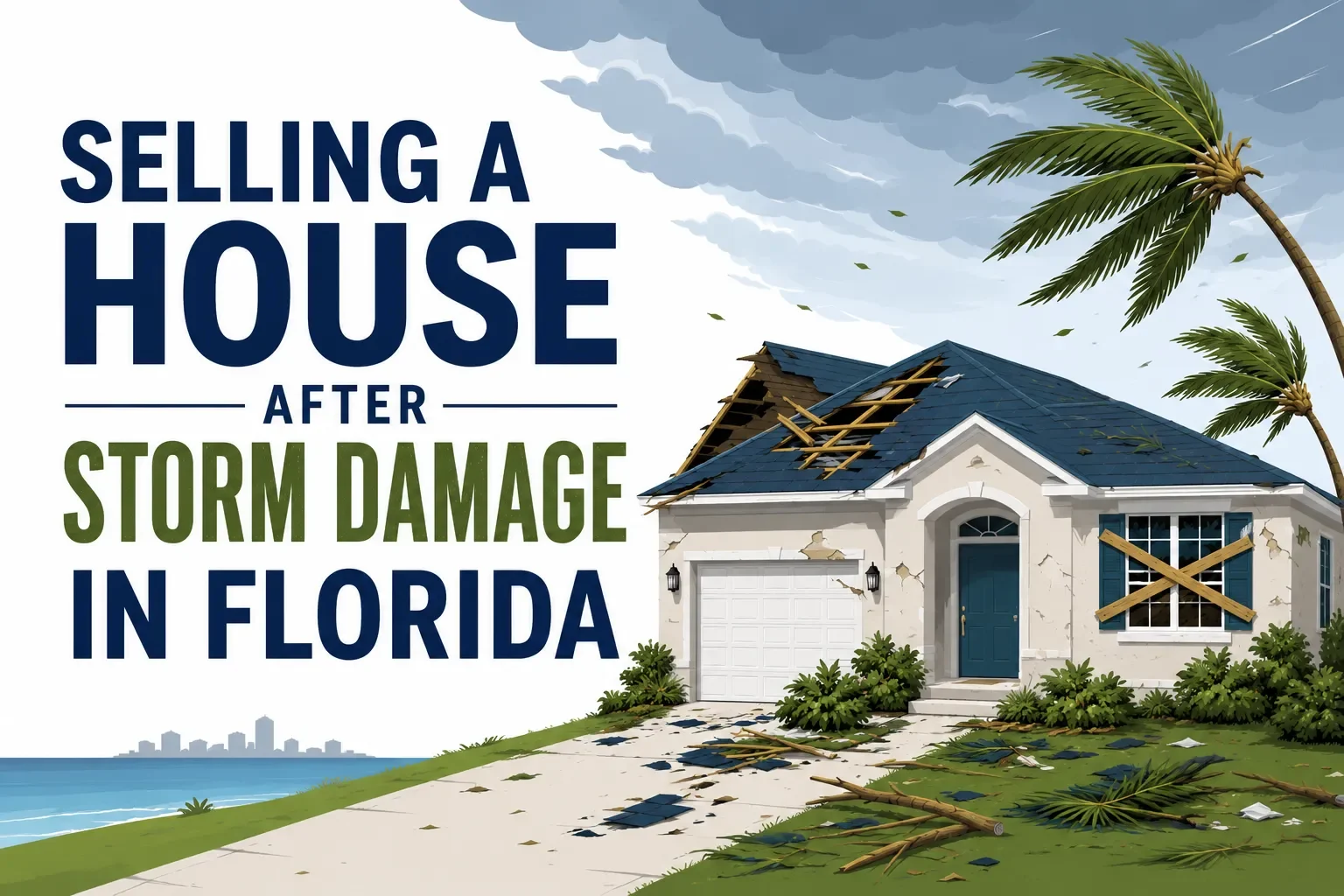
Selling a House After Storm Damage in Florida
Storms are an unfortunate reality for Florida homeowners. Hurricanes, tropical storms, tornadoes, flooding, hail, and severe wind events can cause anything from minor cosmetic damage to major structural problems in a matter of hours. While some homes can be repaired relatively easily, others require extensive roof repairs, water and mold remediation, foundation work, or complete rebuilding. Insurance claims may take months to resolve, repair costs can quickly exceed expectations, and some homeowners simply don’t want to deal with the uncertainty, expense, or disruption.
If your home has been damaged by a storm, you may be wondering whether you can sell it without making repairs. In many cases, the answer is yes. Storm-damaged homes are bought and sold throughout Florida every year, often in their current condition. While traditional buyers may struggle to obtain financing on homes with significant damage, selling your property as-is to a cash buyer can allow you to avoid costly repairs, lengthy insurance delays, and the stress of restoring the home yourself. Understanding your options can help you choose the path that best fits your situation and move forward with confidence.
Can You Sell a Storm-Damaged Home in Florida?
Yes. In most cases, you can sell a storm-damaged house in Florida regardless of how extensive the damage is. Whether your property has roof damage, flooding, water intrusion, mold, broken windows, structural concerns, or damage from hurricanes, tropical storms, tornadoes, or severe winds, you generally do not have to complete repairs before selling.
The amount of damage will influence your home’s market value, but it does not prevent you from selling. Many Florida homeowners choose to repair their property before listing it on the open market, particularly if the damage is minor and insurance covers most of the restoration costs. Others decide that the time, expense, and uncertainty of repairs simply aren’t worth it and instead sell the home as-is.
Selling as-is can eliminate the need to coordinate contractors, wait for insurance claim approvals, manage permits, or invest thousands of dollars into repairs before moving. This option is especially appealing when repair estimates continue to grow, contractor availability is limited after major storms, or the property has significant water, mold, or structural damage that may make financing difficult for traditional buyers.
The best option depends on several factors, including the severity of the damage, your insurance coverage, available funds, repair costs, how quickly you need to sell, and your long-term financial goals. Evaluating each of these factors can help you determine whether repairing the home or selling it in its current condition makes the most sense for your situation.
Do You Have to Repair Storm Damage Before Selling Your Home?
No. Florida home owners do not have the obligation to repair storm damage prior to selling a home. Many homes that are damaged are sold without getting fixed, especially if it is costly to fix. There are a number of reasons why homeowners do not repair storm damage, including:
- High repair costs
- Insurance claim disputes
- Contractor shortages
- Delayed permits
- Relocation plans
- Financial hardship
- Inherited property situations
- Retirement or downsizing
With an as-is sale, homeowners can sidestep the drama, cost, and time needed to undertake major reconstruction projects.
Common Types of Storm Damage Found in Florida Homes
Damage from the storm could be cosmetic or serious structural damage.
Roof Damage
Damage to roofs is a frequent problem after hurricanes and major storms. The absence of some shingles, problems with the underlayment, leaks, and roof structural issues can all affect property value.
Wind Damage
Strong winds can damage:
- Roof systems
- Fencing
- Siding
- Windows
- Doors
- Carports
- Outdoor structures
Damage may be minor, but there still may be structural concerns.
Water Intrusion
Water that has penetrated the roof, windows, or walls can cause other issues long after the storm has subsided. Water damage in walls and ceilings is likely to result in larger repairs.
Flood Damage
Flooding can affect:
- Flooring
- Drywall
- Electrical systems
- HVAC equipment
- Appliances
- Structural components
Flood damage can be extensive, and extensive remediation work may be necessary to restore the property.
Mold Growth
The warm and humid climate conditions in Florida make it a perfect environment for the growth of mold after water intrusion. What starts off as a minor leakage can soon turn into a major problem if left unchecked.
Structural Damage
Severe storms occasionally cause:
- Foundation movement
- Roof framing damage
- Wall failures
- Tree impact damage
- Structural instability
Structural issues can necessitate engineering assessments and particular repairs for properties.
Should You File an Insurance Claim Before Selling?
In many cases, filing an insurance claim after storm damage is a smart first step, even if you’re considering selling your home. Depending on your policy and the cause of the damage, insurance benefits may help cover immediate expenses and reduce your out-of-pocket costs while you evaluate your options.
Insurance proceeds may be available for:
- Emergency tarping and temporary repairs
- Temporary housing or additional living expenses (if covered)
- Debris removal and cleanup
- Roof repairs or replacement
- Water extraction and drying services
- Mold remediation (subject to policy limits)
- Structural repairs and rebuilding costs
Keep in mind that filing a claim does not obligate you to repair the property before selling. Many Florida homeowners begin the claims process to understand the extent of their coverage, then compare the insurance payout with actual contractor estimates before deciding whether repairing the home makes financial sense. In some situations, repair costs, deductibles, contractor shortages, or lengthy insurance timelines lead homeowners to sell the property as-is instead.
Every insurance policy is different. Coverage limits, deductibles, exclusions, depreciation, and claim requirements can vary significantly from one policy to another. Before making any decisions, review your policy carefully, document all storm-related damage, and communicate directly with your insurance company to understand what is covered and what costs you may still be responsible for.
Learn more about disaster assistance and insurance recovery through FEMA Disaster Assistance, the Florida Department of Financial Services – Insurance Consumer Help, and the Florida Office of Insurance Regulation.
Can You Sell a House With an Open Insurance Claim?
Yes. In many cases, you can sell a storm-damaged home in Florida even if your insurance claim is still pending. Homeowners frequently choose to sell before the claim is fully resolved, particularly when repairs are extensive, contractor availability is limited, or they simply want to move on rather than oversee a lengthy restoration project.
If you decide to sell while a claim is open, transparency is essential. Buyers, title companies, and other parties involved in the transaction will typically want to understand:
- Whether an insurance claim has been filed
- The current status of the claim
- The extent of the storm damage
- Contractor repair estimates
- Any insurance payments already received
- Whether additional claim proceeds may still be available
- How any remaining insurance benefits will be handled at closing
Every transaction is different, and the purchase agreement should clearly state how pending insurance claims and any future proceeds will be handled. Providing complete documentation and disclosing all known storm damage helps reduce delays, avoid misunderstandings, and create a smoother closing process for everyone involved.
How Much Is a Storm-Damaged House Worth?
The value of a storm-damaged home depends on much more than the visible damage. Every property is unique, and buyers will evaluate the home’s location, the cost of repairs, the local real estate market, and the property’s potential after restoration before determining what they’re willing to pay.
Some of the biggest factors that affect the value of a storm-damaged house include:
- The property’s location and neighborhood
- The type and severity of the storm damage
- Estimated repair and restoration costs
- Roof, foundation, or structural damage
- Water intrusion, flooding, or mold issues
- The status of any insurance claims
- The age and overall condition of the home
- Current local housing market conditions
- Land or lot value
- Contractor availability and local rebuilding costs
For example, a home with a few missing shingles or minor siding damage will generally retain much more of its value than a property with extensive flooding, structural damage, or widespread mold. Following a major hurricane, repair costs often increase because qualified contractors and building materials are in high demand, which can further impact what buyers are willing to pay.
Because there is no standard formula for valuing a storm-damaged property, it’s often helpful to obtain multiple repair estimates and compare more than one purchase offer. Understanding both the cost to restore the home and its potential market value after repairs can help you decide whether repairing the property or selling it as-is is the better financial choice.
Common Reasons Florida Homeowners Sell After Storm Damage
While every homeowner has their own situation, there are some common situations.
Repair Costs Are Too High
Tens of thousands of dollars can easily be spent on major restoration projects. In a few cases, the homeowner would like to invest less than what the required repairs cost.
Insurance Doesn’t Cover Everything
Insurance payouts are not necessarily enough to rebuild. Items such as deductibles, exclusions, depreciation, and uncovered items can add up and leave homeowners with substantial out-of-pocket costs.
Contractor Delays
After big storms, qualified contractors can have bookings months ahead of time. The uncertainty and stress can be increased while waiting for repairs.
The Property Was Already Aging
There are a lot of Florida homes that need to have some remodeling done before they can be damaged by a storm. With big storm damage repairs stacking on top of existing problems, it could be more worthwhile to sell the home.
Relocation or Life Changes
A long repair process may not be feasible in a job transfer, retirement, divorce, financial hardship, or inherited property scenario.
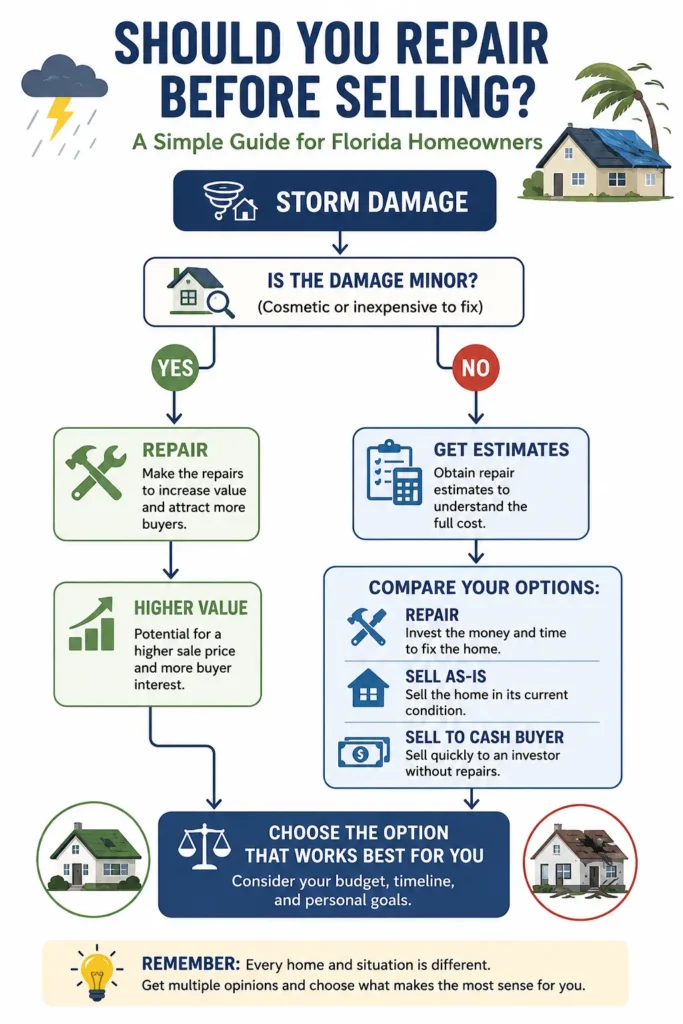
Should You Repair the House Before Selling?
The answer will vary depending on the condition of the property and your objectives. Minor repairs can help to boost buyer interest and marketability. A major reconstruction project includes:
- Contractors
- Permits
- Inspections
- Material costs
- Construction delays
- Additional carrying costs
It’s important to consider whether the potential value improvement is worth the investment before spending a lot of money on repairs. During a lengthy restoration process, many homeowners find that they end up paying quite a bit for holding costs.
If repairs require permits or structural work, homeowners can review requirements through the Florida Building Code Information System.
Options for Selling a Storm-Damaged House in Florida
Basically, Florida homeowners have a number of choices.
Repair and List Traditionally
In other cases, repairs can help to boost value. This can involve extra project management, time, and cost.
Sell As-Is Through a Real Estate Agent
There are some people who actually look for houses that need repair and are ready to buy houses that are damaged. The marketing period may be extended due to a smaller buyer market.
Sell Directly to a Cash Buyer
There are a lot of cash home buyers in Florida who specialize in buying storm-damaged homes. This is a choice that many homeowners make to avoid having to fix any issues, coordinate with contractors, pay inspection fees, deal with financing contingencies, and undergo a long closing process.
What Must Be Disclosed to Buyers?
Florida law generally requires home sellers to disclose known material facts that could affect a property’s value or influence a buyer’s decision to purchase. This obligation typically applies whether you’re selling a fully repaired home or a storm-damaged property as-is.
If your home has been affected by a hurricane, tropical storm, flooding, tornado, hail, or severe wind event, buyers should be informed of any known issues. Common disclosures may include:
- Roof damage or roof repairs
- Water intrusion or active leaks
- Flooding or flood history
- Mold or mildew damage
- Structural or foundation concerns
- Damage to electrical, plumbing, or HVAC systems
- Open or completed insurance claims
- Unrepaired storm damage
- Previous restoration work or renovations
- Outstanding permits or code-related issues, if applicable
Providing accurate and complete disclosures helps buyers make informed decisions, reduces the likelihood of disputes after closing, and promotes a smoother real estate transaction. If you’re uncertain about what should be disclosed, consulting a Florida real estate attorney or licensed real estate professional can help ensure you meet your legal obligations.
Take pictures of the areas that are impacted and keep track of inspection, repair, and insurance claim documentation.
How to Sell a Storm-Damaged Home in Florida
Selling a storm-damaged property can feel overwhelming, but breaking the process into manageable steps can make it easier to evaluate your options and move forward.
Step 1: Assess and Document the Damage
As soon as it’s safe, thoroughly inspect the property and document all visible damage with photographs and videos. Keep copies of inspection reports, repair estimates, insurance correspondence, and any emergency repairs that have already been completed.
Step 2: File an Insurance Claim
If your policy provides coverage, notify your insurance company promptly and begin the claims process. Understanding your potential insurance benefits can help you evaluate whether repairing the home or selling it as-is is the better financial option.
Step 3: Obtain Professional Repair Estimates
Gather estimates from licensed contractors to understand the true cost of restoring the property. Storm-related repairs often uncover hidden damage, making multiple estimates valuable when comparing your options.
Step 4: Compare Your Selling Options
Decide whether it makes more sense to repair the property before listing it traditionally or sell it in its current condition. Consider repair costs, insurance proceeds, contractor availability, market conditions, and how quickly you need to sell.
Step 5: Organize Your Documentation
Compile important records that may be requested by buyers, including insurance claim information, contractor estimates, inspection reports, permits, warranties, receipts for completed repairs, and any available maintenance records.
Step 6: Complete the Sale
Choose the selling method that best aligns with your financial goals and timeline. Whether you list the home after repairs or sell it as-is, being organized, transparent, and prepared can help create a smoother transaction from contract to closing.
If your house is damaged due to the storm, it does not necessarily indicate that you have to build again before selling. There are many Florida homeowners who have sold their homes that have been damaged from hurricanes, the wind, roof leaks, flooding, mold, and other storm damage problems. Whether you decide to do repairs or simply sell the property as is, having an understanding of what you can choose from can help you make the decision that is best for your financial goals and timeline. In some cases, rebuilding is a viable option for owners.
For some, selling is the more practical option as it avoids the months of repairs and coordinating with contractors, insurance negotiations, and ongoing expenses. You can sell your home fast as-is without making repairs, cleaning for showings, hosting open houses, paying real estate agent commissions, or covering seller closing costs.
Get Your Cash Offer Today!
Selling your Florida house doesn’t have to be complicated. At Florida House Buyers Direct, we provide fair, no-obligation cash offers for homes in any condition. There are no repairs, no commissions, no hidden fees, and no obligation to sell. Simply complete the short form below to request your free cash offer. If you’d rather speak with someone first or have questions about the process, call us at (813) 816-0217. Our team is here to answer your questions and help you explore your options – without any pressure.
Skip the Hassle of Traditional Listings
Get A Cash Offer For Your House
"*" indicates required fields
We buy houses throughout Florida in any condition, as-is. No repairs, no renovations, no hassles, just a fair cash offer and a simple sale.
Don’t spend a dime on repairs. We’ll handle everything after closing!
