Key Takeaways
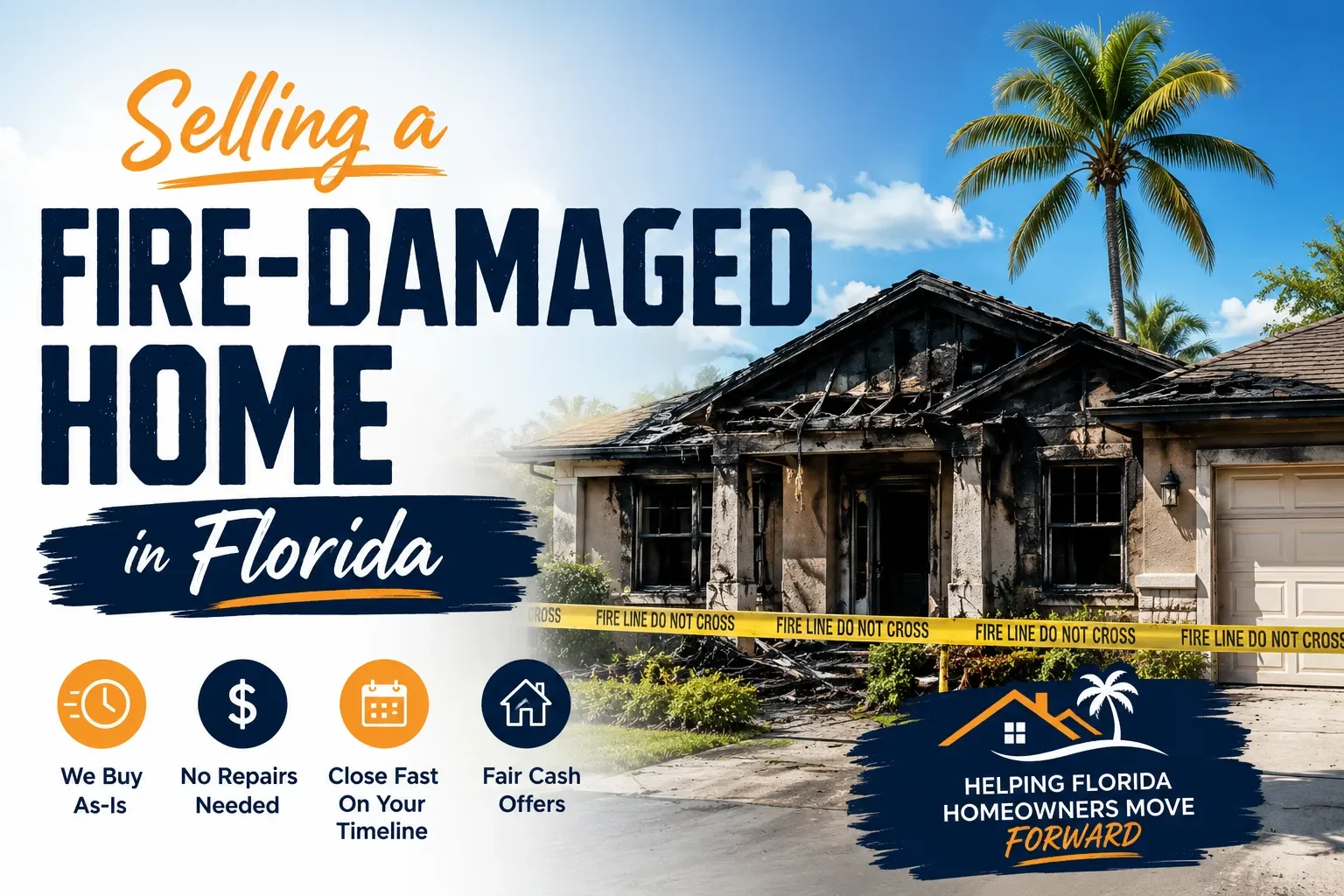
Selling a fire-damaged home in Florida is often possible, even if the property hasn’t been repaired. While every situation is different, understanding your options early can help you avoid unnecessary expenses and make a more confident decision.
You can sell a fire-damaged house as-is. Florida homeowners are not required to complete repairs before selling, and many buyers are willing to purchase homes in their current condition.
Insurance claims don’t always have to delay a sale. In many cases, you can sell your home while an insurance claim is still being processed, although it’s important to understand how the claim will be handled at closing.
Repairing the home isn’t always the best financial decision. Comparing estimated repair costs, insurance coverage, and your home’s current value can help you decide whether rebuilding or selling makes the most sense.
Request your cash offer!
Timeframe: After you tell us a bit about your home, we will get to work creating a customized offer.
If you choose to accept, we are able to close as quickly as 7 days! Of course, if you need longer, we will always work on your schedule.
"*" indicates required fields
Discovering that your home has been damaged by a fire can feel overwhelming. Once the immediate emergency is over, many Florida homeowners are left asking the same questions: Should I rebuild? Will insurance cover the damage? Can I sell the house without making repairs?
The good news is that you can sell a fire-damaged house in Florida, whether the damage is minor or extensive. While every situation is different, many homeowners decide that selling is the most practical option, especially when repair costs are high or rebuilding no longer makes financial or emotional sense.
In this article, we’ll go over how selling a fire-damaged home works in Florida, whether repairs are required, how insurance claims may affect the sale, and the options available so you can make an informed decision.
Can You Sell a Fire-Damaged House in Florida?
Yes. You can legally sell a fire-damaged house in Florida with or without making repairs.
Fire damage will usually reduce a home’s value, but it doesn’t prevent the property from being sold. Many buyers, including investors, builders, and cash home buyers, regularly purchase fire-damaged properties to renovate, rebuild, or develop.
In some cases, buyers are interested in restoring the existing home. In others, the value may be primarily in the land itself. Every property is different, and the amount a buyer is willing to pay depends on the extent of the damage, repair costs, location, and local market conditions.
Do You Have to Repair Fire Damage Before Selling?
No. Florida homeowners are not required to repair fire damage before selling their property.
Many people choose to sell their home as-is because rebuilding can be expensive, time-consuming, and difficult to manage. This is especially true when the property has:
- Structural damage
- Roof damage
- Smoke contamination
- Water damage from firefighting efforts
- Electrical system damage
- Mold growth
- Extensive interior damage
For many homeowners, it comes down to simple economics. Spending tens or even hundreds of thousands of dollars on repairs doesn’t always increase the home’s value enough to justify the investment.
What Types of Fire Damage Affect a Home’s Value?
Fire damage often extends well beyond the areas that actually burned. Even relatively small fires can create problems throughout the property that buyers will consider when determining value.
Structural Damage
Fire can weaken framing, roof trusses, floor joists, and other structural components. Depending on the severity, engineering inspections may be needed before repairs can begin.
Smoke Damage
Smoke and soot can spread throughout the home, affecting walls, ceilings, insulation, HVAC systems, flooring, and even rooms that were never touched by flames. Smoke odors can also linger if the home isn’t professionally cleaned.
Water Damage
Most fires are extinguished with large amounts of water. As a result, many homeowners end up dealing with water damage in addition to the fire itself.
Mold Growth
Florida’s warm, humid climate creates ideal conditions for mold after a fire. If moisture isn’t removed quickly, mold can become another costly issue that needs to be addressed.
Electrical and Mechanical Systems
Fire frequently damages important systems throughout the home, including:
- Electrical wiring
- Breaker panels
- Air conditioning systems
- Plumbing
- Appliances
Replacing these systems can significantly increase restoration costs.
Should You File an Insurance Claim Before Selling Your Fire-Damaged Home?
Many homeowners file an insurance claim soon after a fire.
Depending on your policy, insurance may help cover:
- Temporary housing
- Debris removal
- Emergency stabilization
- Smoke remediation
- Repair costs
- Personal property losses
Whether you should complete repairs before selling depends on your insurance settlement, the extent of the damage, and your personal goals.
Some homeowners use their insurance proceeds to restore the property before listing it. Others choose to sell the home as-is after receiving part or all of their settlement.
Because every insurance policy is different, it’s important to understand exactly what your coverage includes and stay in regular communication with your insurance company throughout the claims process.
Can You Sell a Fire-Damaged House With an Open Insurance Claim?
Yes, in many situations you can.
An insurance claim and the sale of a home can often move forward at the same time, although the details should be carefully reviewed before closing.
Buyers may want information such as:
- Whether an insurance claim has been filed
- The current status of the claim
- Estimated repair costs
- Insurance proceeds already received
- Any remaining claim benefits
Keeping organized records and sharing accurate information can help make the transaction smoother for everyone involved.
How Long Does It Take to Sell a Fire-Damaged House?
There isn’t a single timeline because every situation is different.
If you decide to repair the property first, the process could take several months depending on the extent of the damage, contractor availability, permits, inspections, and your insurance claim.
If you choose to sell the home as-is, the timeline is often much shorter because you can avoid the delays that come with major repairs. The exact closing date will still depend on the buyer, title work, and any insurance matters that need to be resolved.
How Much Is a Fire-Damaged House Worth?
There isn’t a simple formula for determining the value of a fire-damaged home.
Buyers typically consider several factors, including:
- The extent of the fire damage
- Structural condition
- Estimated repair costs
- Location
- Lot value
- Current housing market conditions
- Permit requirements
- Insurance claim status
A home with mostly cosmetic smoke damage may retain much of its value. On the other hand, if the structure suffered significant damage, buyers may view the property as primarily a land purchase. If you’re unsure what your property may be worth, obtaining opinions from several local real estate professionals can provide a better understanding of its current market value.
Common Reasons Florida Homeowners Sell Fire-Damaged Homes
Every homeowner’s situation is unique, but these are some of the most common reasons people decide to sell after a fire.
Repair Costs Are Too Expensive
Major fire restoration projects can easily reach six figures. Rather than investing more money into the property, some homeowners decide selling is the better financial decision.
Insurance Doesn’t Cover Every Expense
Insurance often helps, but it doesn’t always cover the full cost of rebuilding. Deductibles, policy limits, depreciation, and uncovered expenses can leave homeowners responsible for significant out-of-pocket costs.
The Home Is No Longer Livable
Some fires leave homes unsafe or uninhabitable for an extended period. Families who need housing sooner rather than later may decide that selling is the more practical option.
The Home Already Needed Major Updates
If the property needed a new roof, updated electrical wiring, renovations, or other major improvements before the fire, rebuilding may no longer make financial sense.
Emotional Reasons
For many families, the emotional impact of a house fire is just as difficult as the financial loss. Some homeowners simply want a fresh start rather than rebuilding memories tied to the property.
Options for Selling a Florida Fire-Damaged House
Once you understand the extent of the damage and your insurance situation, you’ll generally have three options.
Repair the Home Before Listing
Repairing the property may help maximize its value if the repairs can be completed within budget and the local market supports the investment.
However, rebuilding often involves:
- Hiring contractors
- Obtaining permits
- Scheduling inspections
- Managing construction
- Paying ongoing mortgage, insurance, and utility costs during the project
Sell the Home As-Is Through a Real Estate Agent
Some buyers are willing to purchase fire-damaged homes through a traditional real estate sale.
While this approach can work well, properties that require significant repairs often attract fewer buyers, which may result in a longer time on the market.
Sell Directly to a Cash Buyer
Many fire-damaged homes are sold directly to cash buyers who specialize in purchasing properties throughout Florida that need repairs.
For homeowners who want to avoid renovations, inspections, contractor coordination, financing delays, and additional carrying costs, selling directly can be a simpler option.
Steps to Selling a Fire-Damaged Home in Florida
If you’ve decided that selling is the right move, having a plan can make the process feel much more manageable. While every fire loss is different, these are the typical steps Florida homeowners take when preparing to sell a fire-damaged property in the state of Florida.
Step 1: Secure the Property
Take steps to prevent additional damage and secure the home from unauthorized entry.
Step 2: Contact Your Insurance Company
Report the loss as soon as possible and begin the claims process.
Step 3: Document the Damage
Take photographs, save inspection reports, keep repair estimates, and organize all insurance correspondence.
Step 4: Obtain Repair Estimates
Understanding the estimated cost of repairs can help you decide whether rebuilding or selling makes more financial sense.
Step 5: Compare Your Selling Options
Consider your budget, timeline, insurance settlement, and long-term goals before deciding how you want to sell.
Step 6: Complete the Sale
Choose the option that best fits your situation and move forward with confidence.
Final Thoughts
After experiencing a house fire, deciding what to do next isn’t always easy. While some Florida homeowners choose to rebuild, others decide that selling the property as-is is the best way to move forward.
Before making a decision, consider your repair costs, insurance coverage, the home’s current value, and what makes the most sense for your family. Looking at the full picture can help you choose the option that feels right for your situation.
Get Your Cash Offer Today!
Selling your house fast in Florida doesn’t have to be complicated. At Florida House Buyers Direct, we provide fair, no-obligation cash offers for homes in any condition. There are no repairs, no commissions, no hidden fees, and no obligation to sell. Simply complete the short form below to request your free cash offer. If you’d rather speak with someone first or have questions about the process, call us at (813) 816-0217. Our team is here to answer your questions and help you explore your options – without any pressure.
Skip the Hassle of Traditional Listings
Get A Cash Offer For Your House
"*" indicates required fields
We buy houses throughout Florida in any condition, as-is. No repairs, no renovations, no hassles, just a fair cash offer and a simple sale.
Don’t spend a dime on repairs. We’ll handle everything after closing!
Frequently Asked Questions
Can I sell a house after a fire without making repairs?
Yes. Many fire-damaged homes in Florida are sold as-is without the owner completing repairs first.
Can I sell a fire-damaged house with an open insurance claim?
In many cases, yes. Whether an insurance claim remains with the seller or transfers in some way depends on the details of the claim and the terms of the sale.
Can you sell a house with smoke damage in Florida?
Yes. Homes with smoke damage can usually be sold with or without repairs. Buyers will typically consider the severity of the smoke damage, odor removal, and any restoration work that’s needed when determining value.
Do I have to disclose previous fire damage?
In most cases, yes. Florida sellers are generally required to disclose known material defects that could affect the property’s value or desirability.
Does fire damage reduce a home’s value?
Usually, yes. The amount depends on the extent of the damage, repair costs, location, and current market conditions. Minor smoke damage may have a relatively small impact, while major structural damage can significantly reduce value.
Is a fire-damaged house worth repairing?
That depends on the cost of repairs, your insurance coverage, the home’s value after repairs, and your personal goals. For some homeowners, rebuilding makes financial sense. For others, selling as-is is the better option.
